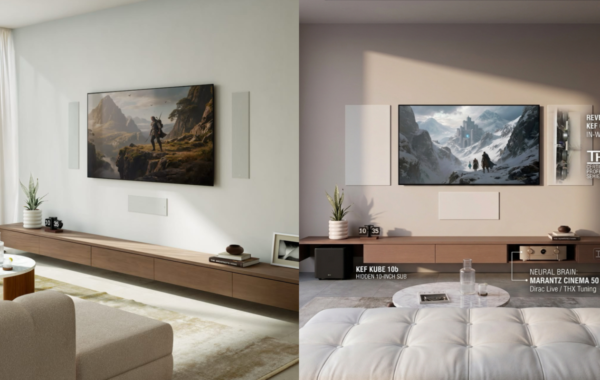

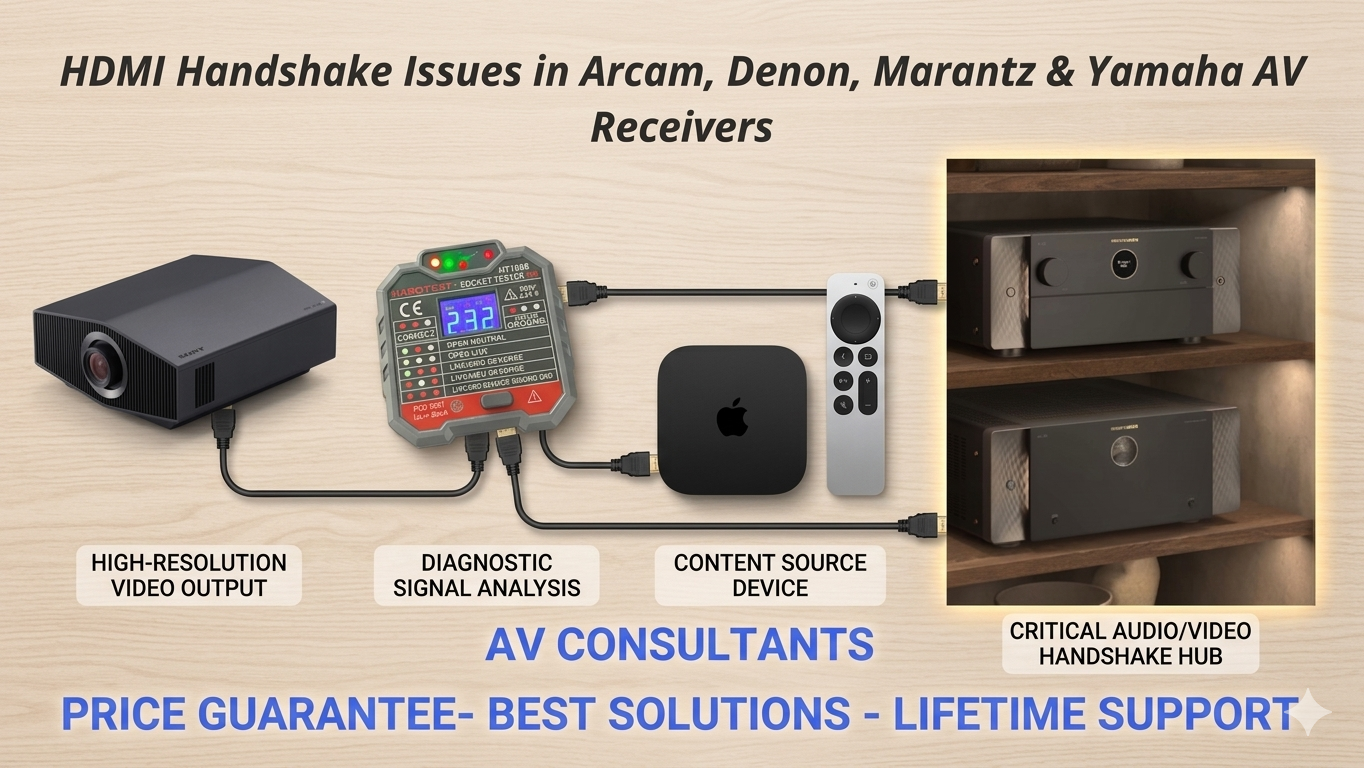

The Invisible Problem in High-End Home Theaters
HDMI Handshake Failures Explained — Causes, Power Issues & Professional Solutions
By Deepak Saxena | Founder – AV Consultants
Introduction: When Premium Systems Fail Without Warning
You install a world-class home theater designed for ultimate performance. A high-end AVR from Arcam, Denon, Marantz, or Yamaha forms the heart of the system. A stunning 4K projector delivers breathtaking visuals, while a powerful speaker setup creates immersive sound.
Everything is engineered to deliver a flawless cinematic experience.
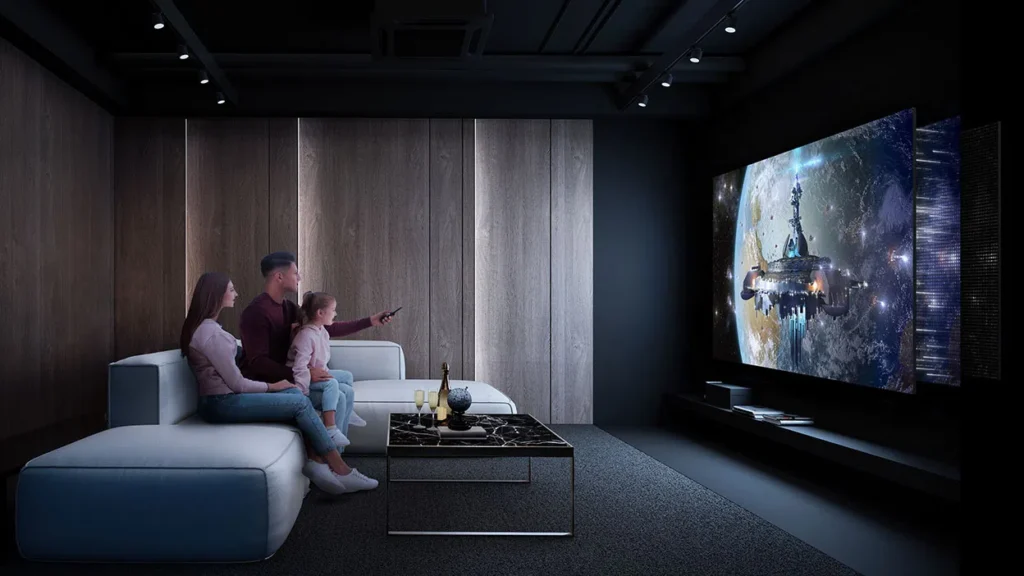
And yet, the system behaves unpredictably. The screen suddenly goes black. Audio disappears without warning. Sometimes the system works perfectly, and at other times it fails completely.
This is not a failure of equipment.
This is the HDMI handshake problem—one of the most misunderstood and underestimated challenges in modern AV integration.
In this guide, we go beyond basic troubleshooting to explore the real causes behind these issues, the impact of power quality, and the professional solutions used in high-performance home theaters.
Understanding HDMI Handshake: The Digital Conversation
Before any audio or video signal is transmitted, all HDMI-connected devices must first establish communication. This process is known as the HDMI handshake.
It is essentially a digital conversation between the source, AVR, and display, where they exchange critical information required for signal transmission.
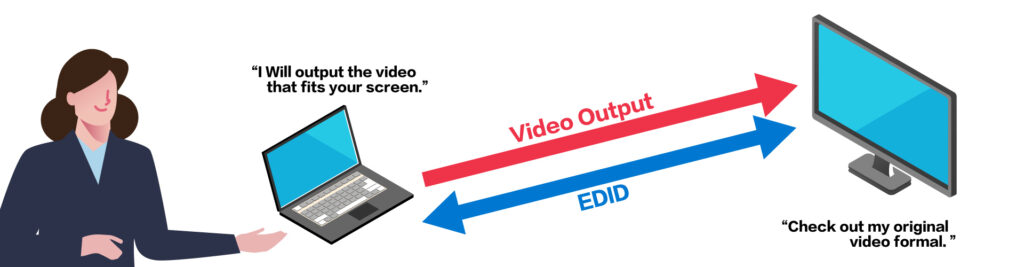
This process includes EDID (Extended Display Identification Data), where the display communicates its supported resolutions and audio formats. It also involves HDCP authentication, which ensures content protection compliance. Finally, the devices negotiate parameters such as frame rate, color depth, and audio channel configuration.
Only when this entire process is successfully completed does the system begin transmitting audio and video.
If even a small part of this communication fails, the result is immediate and noticeable—no signal, black screen, missing audio, or intermittent flickering.
Why HDMI Handshake Fails in Real Installations
In controlled environments, HDMI systems perform flawlessly. However, real-world home theater installations introduce multiple variables that complicate this process.
A typical premium setup includes a source device, an AVR, and a projector. Each additional device increases the complexity of communication, creating more opportunities for handshake failure.
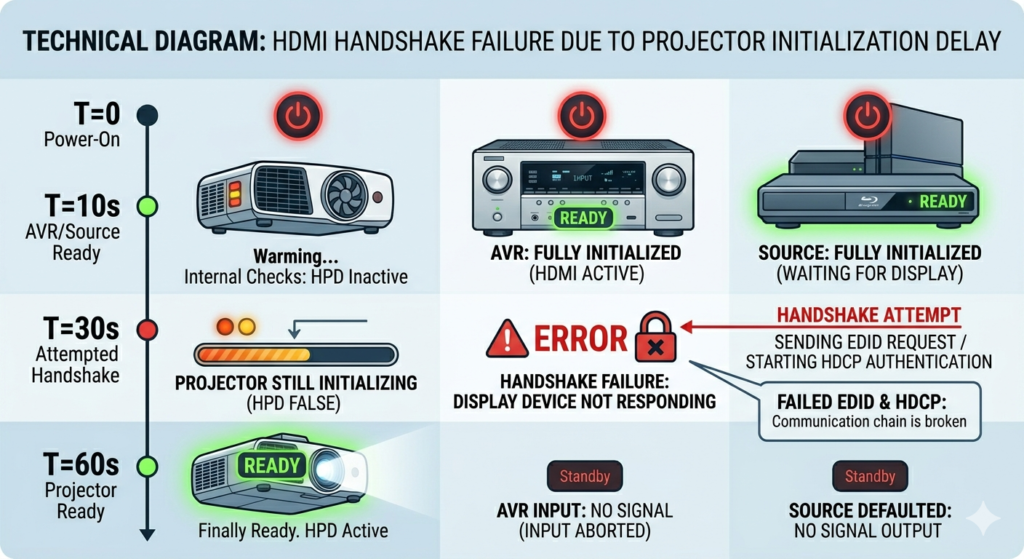
One of the most common causes is projector initialization delay. Unlike televisions, projectors take significantly longer to boot up. During this time, the AVR may attempt to establish communication before the projector is ready, resulting in a failed handshake.
Cable infrastructure also plays a critical role. In luxury home theaters, HDMI cables often run long distances and carry high-bandwidth signals such as 4K HDR or even 8K. Poor-quality or improperly selected cables can lead to signal attenuation and data loss, directly impacting handshake stability.
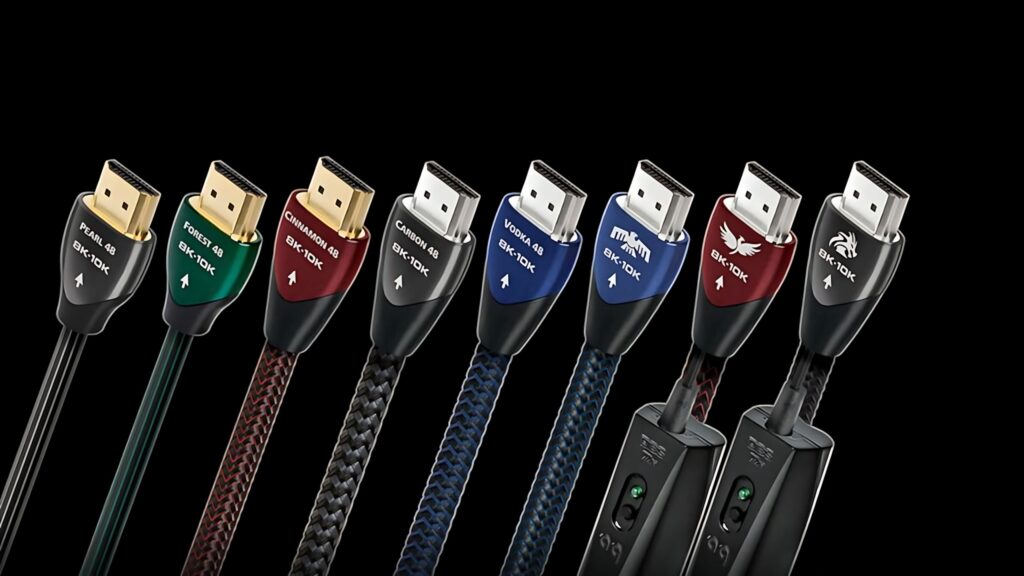
Another major factor is HDCP version mismatch. When devices operate on different HDCP standards, the system may reject the signal entirely, leading to a blank screen.
Firmware inconsistencies further complicate the situation. Even premium brands like Denon and Marantz rely on complex HDMI chipsets, where minor software bugs can cause intermittent synchronization issues.
Finally, incorrect power-on sequencing is a hidden but critical issue. If devices are turned on in the wrong order, the handshake process may occur before all components are ready, causing the system to lock into a failure state.
The Most Ignored Factor: Power Quality & Voltage Stability
One of the most overlooked causes of HDMI handshake issues is poor power quality. In many real-world environments, especially in regions with fluctuating electricity supply, voltage instability becomes a serious concern.
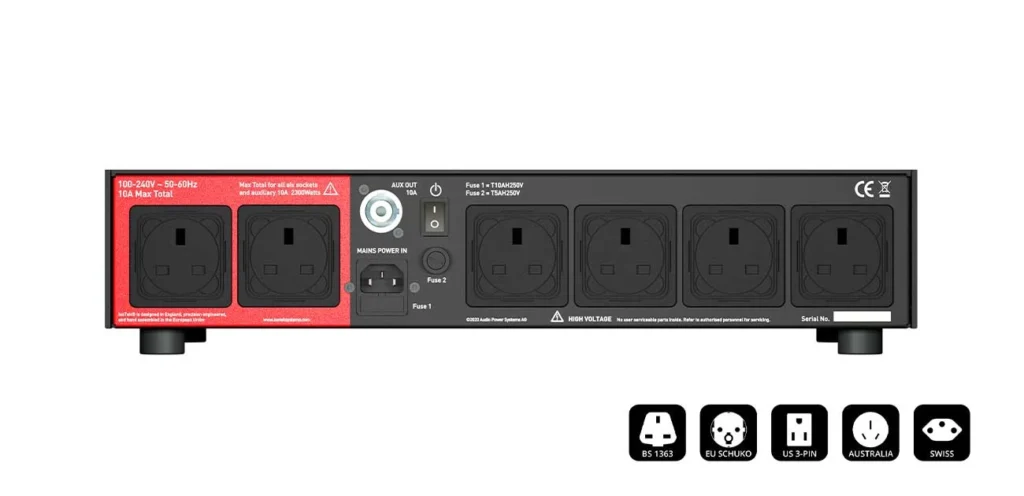
HDMI is a high-speed digital interface that depends on precise timing and stable electrical conditions. When voltage fluctuates or drops, it affects the internal clocking mechanisms of AV components. This leads to data corruption, timing errors, and ultimately handshake failure.
These issues often present themselves as inconsistent system behavior. The setup may work perfectly at times and fail randomly at others. Audio may disappear while video remains active. In many cases, the system works better during off-peak hours when the power supply is more stable.
These symptoms are not coincidental—they are directly linked to electrical instability affecting sensitive HDMI circuitry.
Do Power Conditioners Solve HDMI Problems?
Power conditioners from brands like IsoTek, AudioQuest, and Taga Harmony are commonly used in high-end home theaters.
These devices play an important role in improving overall system performance by filtering electrical noise and providing cleaner power to connected equipment.
However, it is important to understand their limitations.
Power conditioners do not directly fix HDMI handshake issues. They do not resolve EDID conflicts, correct HDCP mismatches, or control signal timing between devices.
What they do is improve the operating environment. By stabilizing voltage and reducing electrical noise, they minimize the chances of handshake failures and improve overall system reliability.
In professional installations, power conditioning is treated as a supporting element, not a standalone solution.
Real-World Scenario: When Projector, AVR & Source Fail Together
A very common issue observed in home theaters is when all devices appear to be powered on, yet there is no audio or video output.
This situation typically arises due to timing mismatches during system startup. The projector may not be fully initialized when the AVR begins signal transmission. At the same time, voltage fluctuations or weak HDMI signals can further disrupt the handshake process.
Restarting the system often resolves the issue temporarily because it forces a fresh handshake under different timing conditions. However, this is not a permanent solution—it simply resets the communication process.
Professional Solutions for Stable HDMI Performance
Achieving reliable HDMI performance requires a systematic and engineered approach.
The first step is proper power-on sequencing. The display device, especially a projector, should always be turned on first, followed by the AVR and then the source. This ensures that all devices are ready before communication begins.
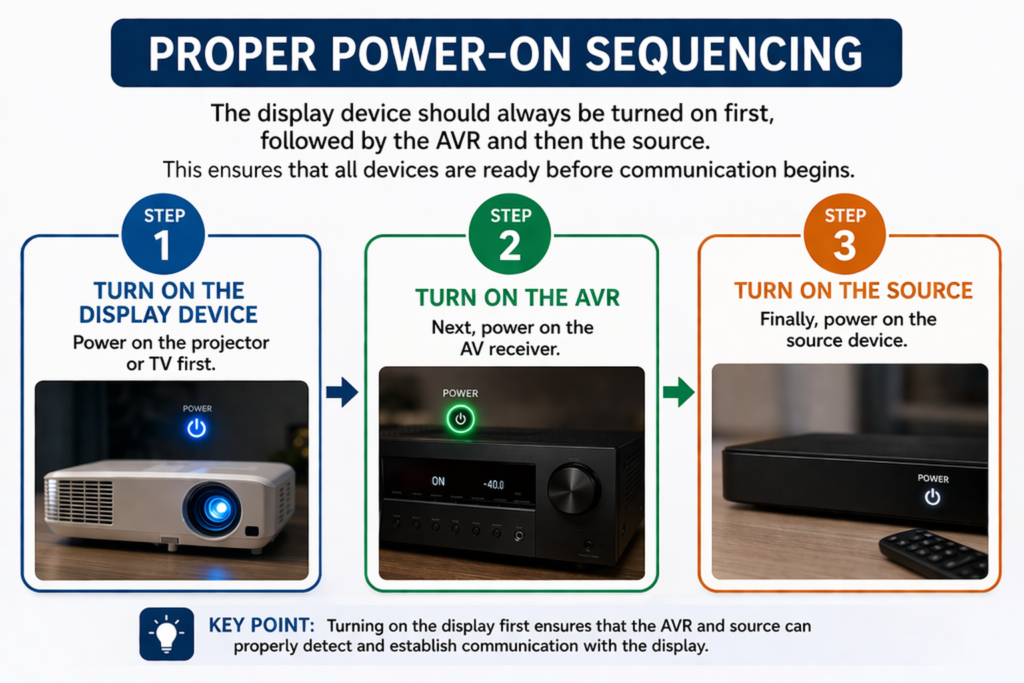
In advanced setups, automation systems and smart control solutions are used to manage this sequence precisely, eliminating human error.
Signal stabilization tools such as HDMI matrix switchers, EDID managers, and signal regenerators are also widely used in professional installations. These devices maintain consistent communication parameters and prevent handshake renegotiation.
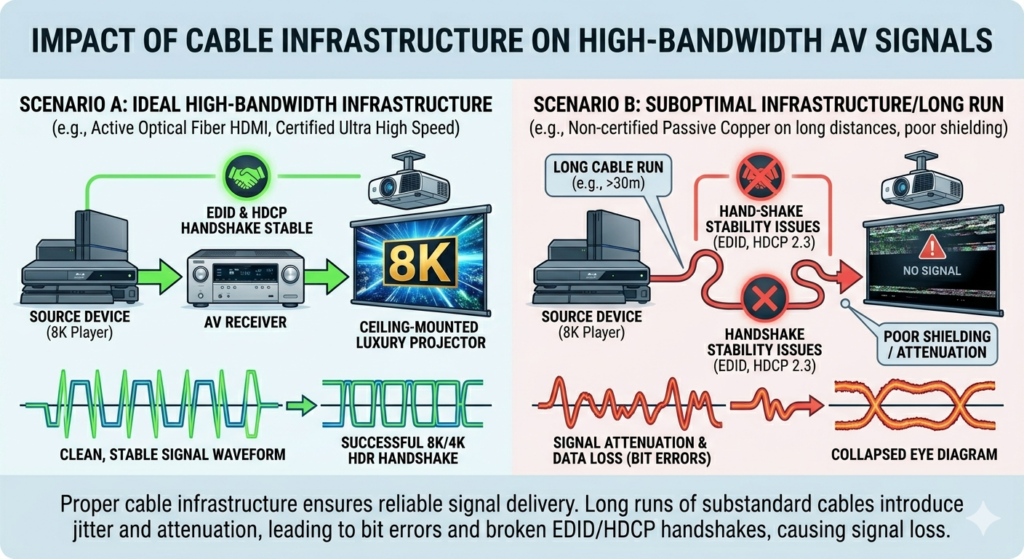
High-quality HDMI infrastructure is equally critical. Certified ultra high-speed cables or optical HDMI solutions should be used for long-distance transmission to ensure signal integrity.
Voltage stabilization is particularly important in regions with inconsistent power supply. A combination of a servo stabilizer, online UPS, and power conditioner creates a stable electrical environment, significantly reducing HDMI-related issues.
Firmware updates must also be maintained regularly, as manufacturers like Yamaha and Arcam frequently release improvements for HDMI stability.
Additional refinements such as HDMI delay adjustments help synchronize communication timing, especially with slower display devices like projectors.
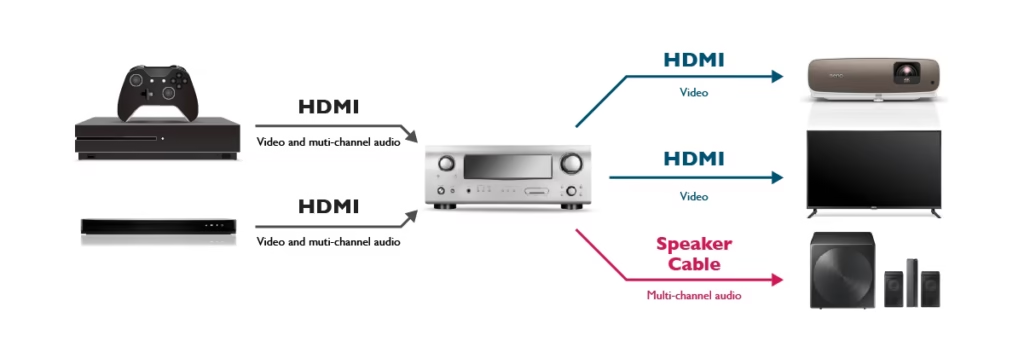
In advanced system design, simplifying the signal path can dramatically improve reliability. Routing video directly to the display while sending audio separately to the AVR reduces the complexity of the HDMI chain.
Finally, proper grounding and electrical design ensure a clean and stable foundation for the entire system.
The AV Consultant Approach: Engineering Stability
A high-performance home theater is not just about selecting premium equipment—it is about designing a system that works flawlessly under real-world conditions.
The professional approach begins with careful system design, where signal paths are optimized and device compatibility is ensured.
Power planning follows, with dedicated electrical lines and stabilization systems implemented to maintain consistent voltage.
Cable selection and routing are engineered based on distance and bandwidth requirements, ensuring minimal signal loss.
Signal management techniques such as EDID control and HDMI distribution systems are integrated to maintain stable communication.
Finally, the system undergoes extensive calibration and real-world testing, including multiple startup cycles, to ensure consistent performance.
The result is a home theater that delivers reliable, uninterrupted performance every time it is used.
Final Verdict: A Design Challenge, Not a Product Failure
HDMI handshake issues are often misunderstood as equipment failures. In reality, they are system design challenges.
Even the most advanced AVRs from Denon, Marantz, Arcam, and Yamaha can face these issues if the system is not properly engineered.
The root causes lie in signal management, power stability, and system architecture—not in the quality of individual components.
Conclusion: The Invisible Upgrade That Defines Performance
In high-end home cinema, most attention is given to visible components such as projectors, speakers, and AVRs.
However, true performance lies in the invisible aspects—signal integrity, power quality, and system design.
When these elements are properly engineered, the system delivers instant startup, consistent audio and video performance, and long-term reliability.
Because in luxury home theater design, the difference between a good system and a great one is not what you see—it is how seamlessly everything works together.
About the Author
Deepak Saxena is the founder of AV Consultants, with over 17 years of experience in designing and executing high-performance home theaters across India.
His philosophy is rooted in precision engineering and client satisfaction:
“A true home theater is not built with products—it is engineered with perfection.”