

Professional Technical Comparison by AV Consultants – Deepak Saxena
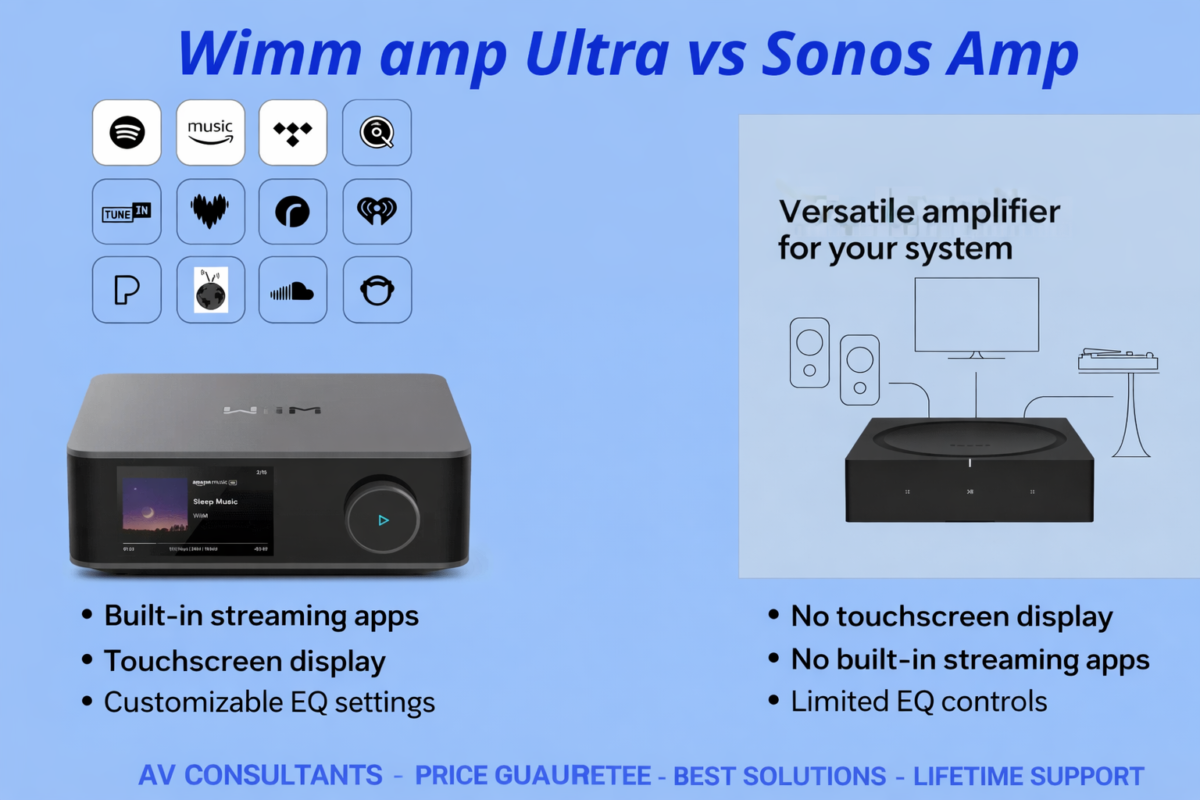
In the rapidly evolving world of modern audio systems, consumers are increasingly looking for compact, powerful, and intelligent audio solutions that combine streaming technology, amplification, and smart control into a single device. Two products that are currently dominating discussions among audio professionals, custom installers, and audiophile enthusiasts are the WiiM Amp Ultra and the Sonos Amp.
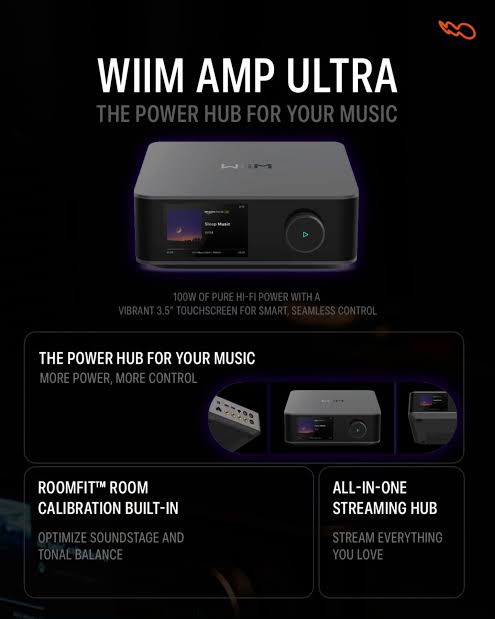
Both devices represent a new generation of all-in-one streaming amplifiers, designed to power high-quality stereo systems, distributed audio setups, in-wall speakers, and multi-room music environments without requiring large AV receivers or complicated audio racks. These compact amplifiers integrate network streaming platforms, high-efficiency Class-D amplification, digital signal processing (DSP), and app-based control, making them extremely attractive for modern homes.
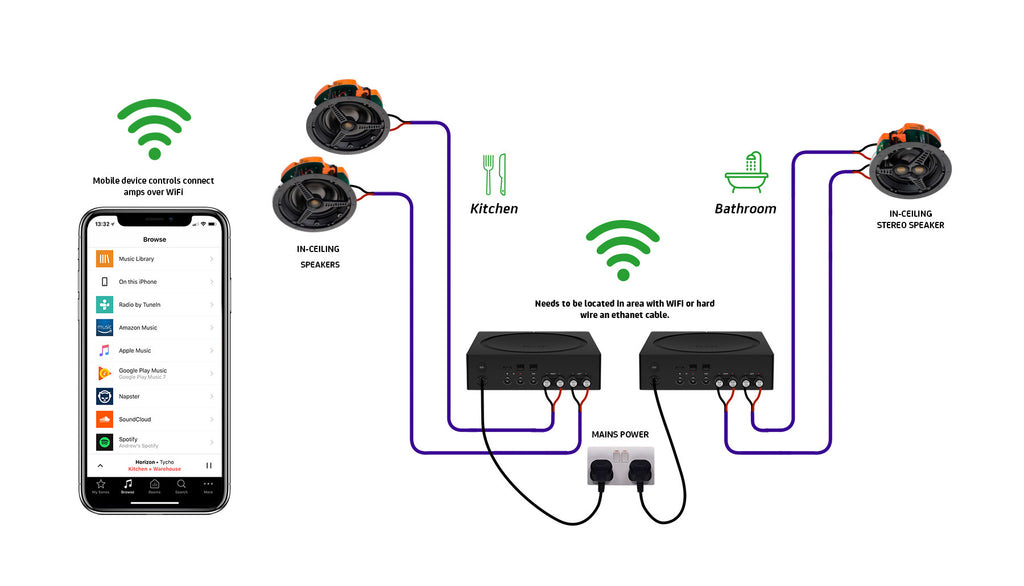
At AV Consultants, led by Deepak Saxena (Owner & Lead Audio Consultant), these products are frequently evaluated and installed in residential and commercial audio projects across Punjab, Chandigarh, Delhi NCR, and North India. With years of hands-on installation experience and expertise in premium audio systems, Deepak Saxena and his team specialize in designing high-performance stereo systems, distributed audio networks, and custom home theatre installations.
Through real-world testing, system calibration, and long-term integration in client homes, AV Consultants has developed a deep understanding of how the WiiM ecosystem and the Sonos ecosystem perform in practical environments. While both products may appear similar on paper, their internal engineering architecture, amplifier topology, digital audio processing, and ecosystem philosophy are fundamentally different.
This detailed professional comparison explores the true technical differences, performance characteristics, sound quality, and installation advantages of these two leading streaming amplifiers.
The Rise of Streaming Amplifiers in Modern Home Audio
Traditional stereo systems required multiple components such as a separate amplifier, DAC, network streamer, and sometimes additional control hardware. While this approach still provides maximum flexibility for high-end audiophile setups, it can be complex and expensive for many homeowners.
Modern streaming amplifiers like the WiiM Amp Ultra and Sonos Amp simplify the entire audio chain by combining these components into a single intelligent device.
This design philosophy offers several advantages:
• Reduced system complexity
• Lower installation costs
• Smaller equipment footprint
• Seamless app-based control
• Integrated streaming services
For many modern living spaces—especially apartments, living rooms, bedrooms, and distributed audio systems—these compact amplifiers provide more than enough power and functionality to drive high-quality speakers.
However, despite serving a similar purpose, the engineering design philosophy behind WiiM and Sonos is very different.
Internal Amplifier Architecture & Engineering Design
For professional installers and audio engineers, the most critical aspect of any amplifier is how it behaves under real speaker loads.
Speakers do not maintain a constant impedance. A speaker rated at 8 ohms can easily drop to 3–4 ohms at certain frequencies, and poorly designed amplifiers can show significant frequency response changes under these conditions.
Understanding how each amplifier handles these impedance variations reveals a lot about the accuracy and stability of sound reproduction.
WiiM Amp Ultra – Texas Instruments TPA3255 with Post-Filter Feedback
The WiiM Amp Ultra uses one of the most respected Class-D amplifier platforms currently available: the Texas Instruments TPA3255.
However, WiiM takes this design further by implementing an advanced feedback system known as Post-Filter Feedback (PFFB).
Traditional Class-D amplifiers measure their feedback before the output filter stage, which means they cannot fully compensate for impedance-related changes caused by different speakers.
In contrast, Post-Filter Feedback measures the signal after the filter stage, allowing the amplifier to monitor the actual signal being delivered to the speaker terminals.
This design provides several important technical advantages:
• Significantly improved frequency response consistency
• Reduced distortion caused by impedance swings
• Better compatibility with complex speaker loads
• More accurate tonal balance across different speakers
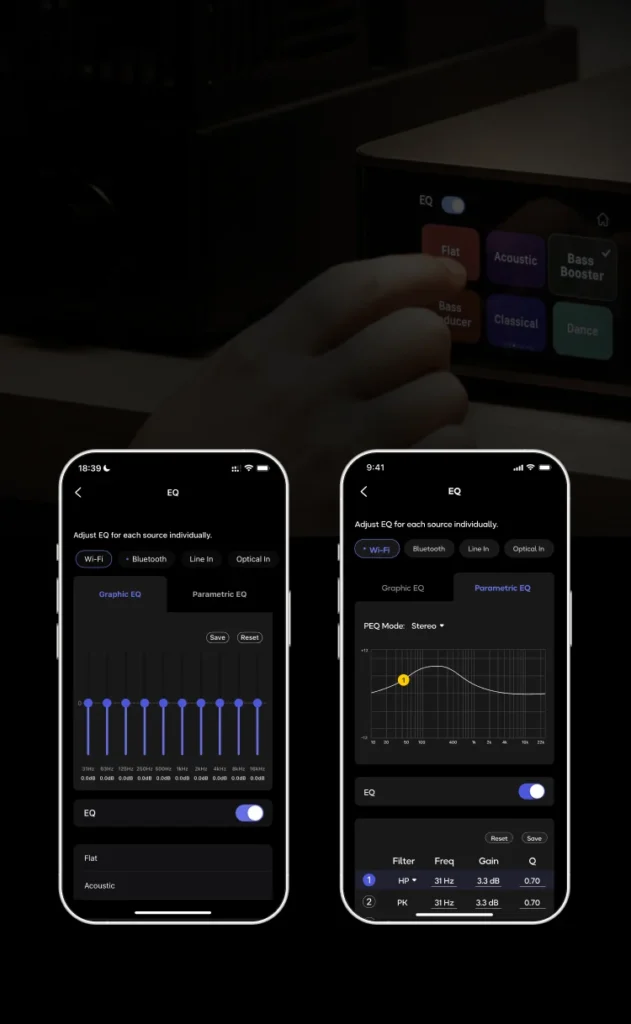
For professional installers like Deepak Saxena at AV Consultants, this design is particularly beneficial when pairing the amplifier with bookshelf speakers, in-wall speakers, and architectural audio systems where impedance curves can vary significantly.
Another important component inside the WiiM Amp Ultra is its high-performance digital-to-analog converter:
ESS ES9039Q2M DAC
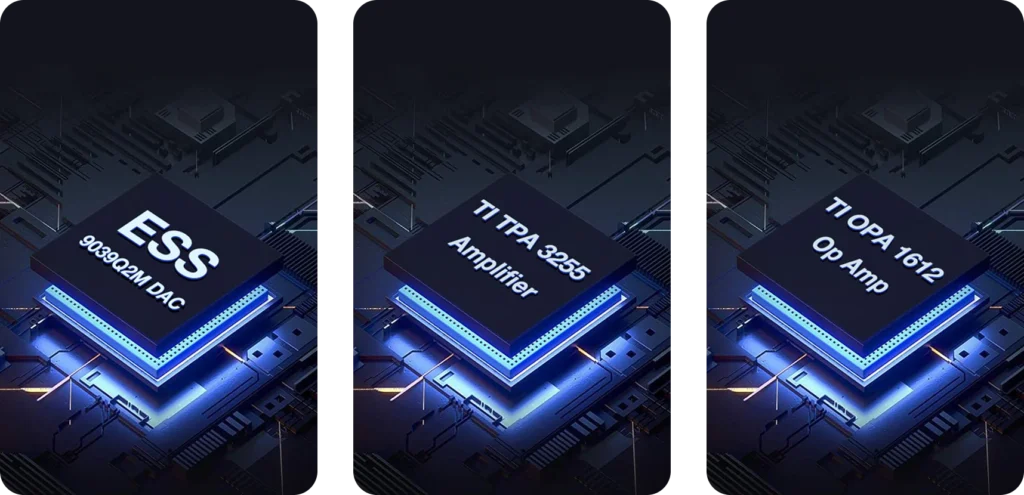
This DAC is part of the ESS Sabre family, widely respected in high-end audio for its extremely low noise floor, high dynamic range, and exceptional detail retrieval.
Combined with the TPA3255 amplifier and advanced DSP processing, the WiiM platform produces a sound signature that is generally described as neutral, transparent, and highly resolving.
For listeners who prioritize accurate music reproduction and audiophile performance, this architecture offers a strong technical advantage.
Sonos Amp – Qualcomm Direct Digital Feedback Amplifier (DDFA)
The Sonos Amp takes a completely different engineering approach.
Instead of a traditional analog amplification chain, Sonos uses a Qualcomm Direct Digital Feedback Amplifier (DDFA) architecture.
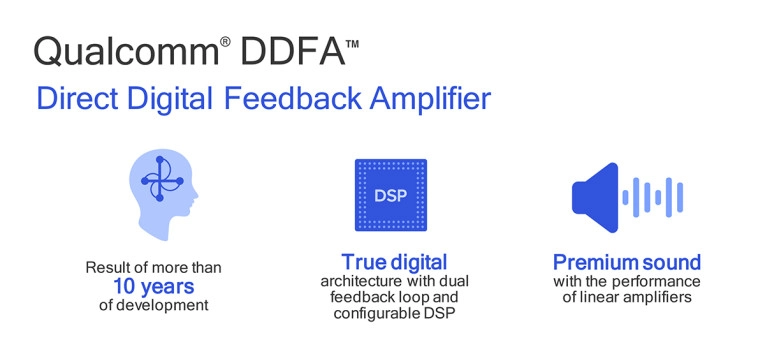
In this design, the audio signal remains in the digital domain almost until the final output stage. Conversion to analog happens only at the last moment, and the entire amplifier system is tightly integrated with Sonos’s DSP processing engine.
This architecture provides several advantages:
• Extremely high amplifier efficiency
• Tight integration with Sonos DSP processing
• Precise synchronization for multi-room playback
• Consistent performance across the Sonos ecosystem
While the Sonos architecture may not focus on raw audiophile measurement performance in the same way as the WiiM platform, it excels in system stability, simplicity, and multi-room reliability.
For many homeowners, these qualities are just as important as absolute audio precision.
Power Output & Speaker Compatibility
Power output is another important consideration when selecting a streaming amplifier.
The Sonos Amp is rated at approximately 125 watts per channel into 8 ohms, with the ability to deliver up to 200 watts into 4 ohms. This makes it capable of driving a wide range of speakers, including outdoor speakers, large in-ceiling speakers, and distributed audio systems.
The WiiM Amp Ultra typically delivers around 100 watts per channel into 8 ohms and close to 200 watts into 4 ohms, depending on load conditions.
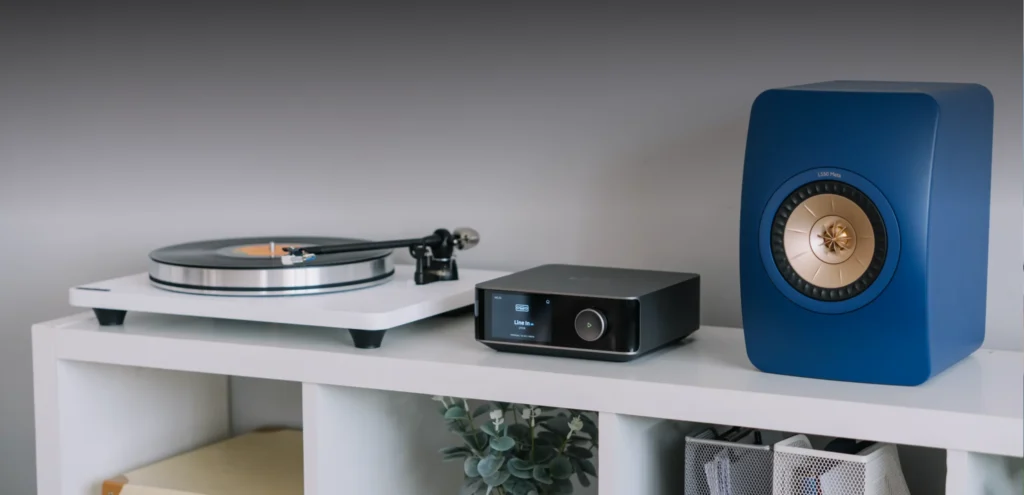
While the raw power numbers appear similar, the PFFB amplifier architecture of the WiiM platform often provides more consistent frequency response under varying speaker loads, which can translate into more accurate sound reproduction.
For most residential stereo systems and architectural speakers, both amplifiers provide more than sufficient power.
Streaming Ecosystem & Platform Flexibility
One of the biggest differences between the two systems lies in their streaming ecosystems.
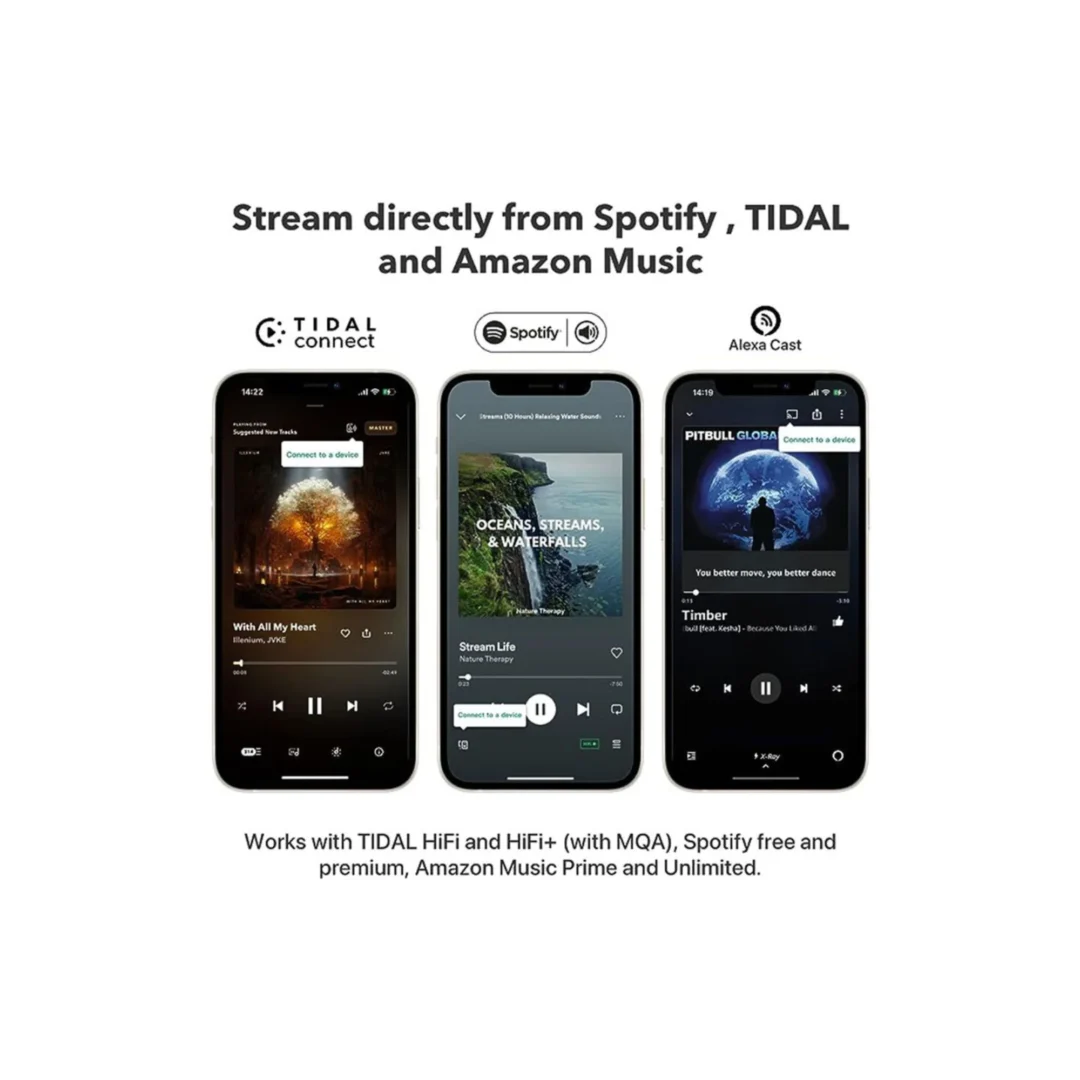
The WiiM ecosystem is designed around an open streaming platform. It supports a wide range of services and protocols including:
• Spotify Connect
• TIDAL Connect
• Apple AirPlay 2
• Chromecast Audio
• Amazon Music
• DLNA streaming
• Roon compatibility
This flexibility makes the WiiM platform extremely attractive for audiophile streaming systems and advanced smart homes.
In contrast, the Sonos ecosystem focuses on simplicity and reliability.
The Sonos app integrates dozens of streaming services into a single unified interface, making it incredibly easy for family members to control music throughout the home.
For distributed audio systems with multiple zones, the Sonos platform remains one of the most stable and user-friendly solutions available today.
Multi-Room Audio Performance
Multi-room synchronization is where the Sonos ecosystem truly shines.
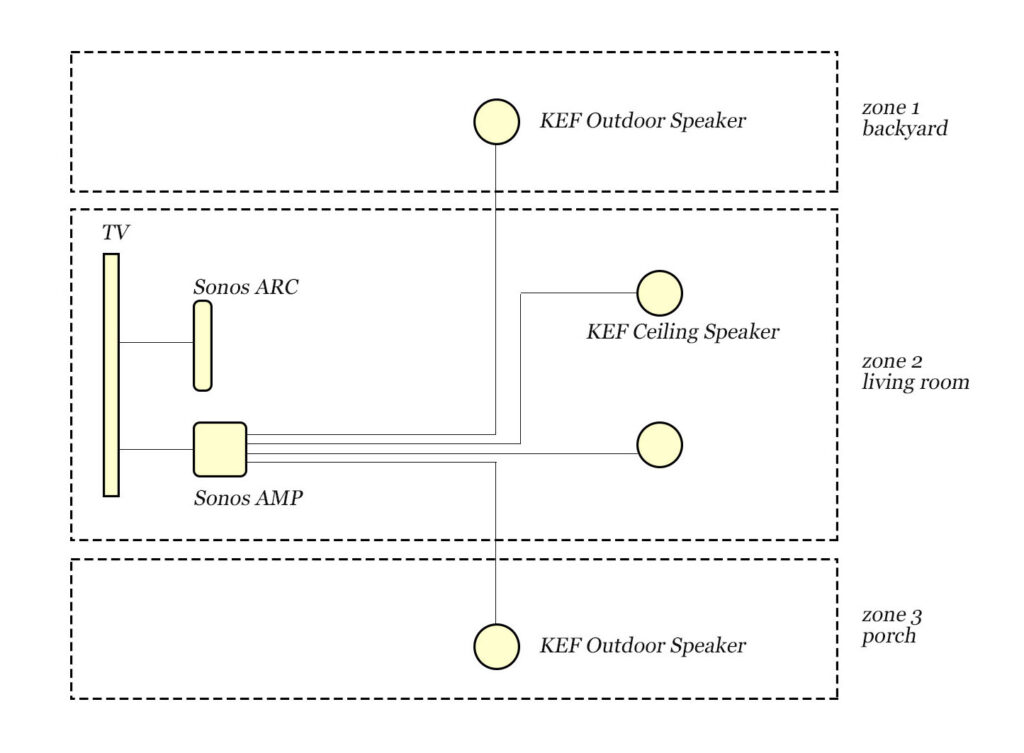
The Sonos Amp is part of one of the most mature multi-room audio ecosystems ever created. Installers can group multiple rooms together with minimal latency and extremely reliable synchronization.
For homes with four, six, or even ten audio zones, Sonos continues to deliver exceptional stability.
The WiiM Amp Ultra also supports multi-room streaming through AirPlay, Chromecast groups, and the WiiM ecosystem. However, the platform is still evolving compared to the long-established Sonos system.
Sound Quality Comparison
From a purely sonic perspective, both amplifiers deliver excellent performance, but their tuning philosophies are slightly different.
The WiiM Amp Ultra generally offers:
• Neutral tonal balance
• High resolution detail
• Very low noise floor
• Strong audiophile measurement performance
The Sonos Amp tends to deliver:
• Slightly warmer sound signature
• Strong bass presence
• Optimized tuning for casual listening environments
For critical music listening, many audio professionals prefer the precision of the WiiM platform, while Sonos excels in whole-home entertainment environments.
Final Expert Verdict from AV Consultants
After extensive real-world testing and installation experience, Deepak Saxena (Owner of AV Consultants) concludes that both amplifiers serve different types of users.
The WiiM Amp Ultra is an excellent choice for listeners who want maximum audio fidelity, flexible streaming options, and advanced DSP control.
The Sonos Amp remains one of the most reliable and user-friendly multi-room audio solutions available today.
For audiophile stereo systems, the WiiM platform currently offers stronger technical performance and better measurement characteristics.
For large distributed audio installations, the Sonos ecosystem continues to be one of the easiest and most stable systems to deploy.
Author & Expert Reviewer
Deepak Saxena
Owner & Lead System Designer
AV Consultants
Specialists in Home Theatre, Hi-Fi Stereo, and Multi-Room Audio Installations
Serving: Punjab • Chandigarh • Haryana • Delhi NCR • North India
Professional demo and system consultation available by appointment.